- 2
Mount Kilimanjaro
Africa’s Silent Giant Awaits Your Footsteps
Rising in solitary majesty from the sun-baked plains of northern Tanzania, Mount Kilimanjaro needs no introduction yet it defies every expectation. At 5,895 meters (19,341 feet), it is Africa’s highest peak and the world’s tallest free-standing mountain, a dormant volcano whose snow capped summit, Uhuru Peak, glows rose gold at dawn against an equatorial sky. But Kilimanjaro’s true power lies not in statistics it’s in the quiet transformation that unfolds with every step upward, through ecosystems that shift from cultivated foothills to arctic summit in the span of a week’s journey.
What makes Kilimanjaro uniquely compelling is its accessibility. Unlike the technical climbs of the Himalayas or Andes, reaching the rooftop of Africa requires no ropes, crampons, or mountaineering experience only resilience, preparation, and respect for the mountain’s rhythm. Seven established routes wind up its slopes, each offering a distinct character: the forested solitude of Lemosho, the dramatic Barranco Wall of Machame, the remote wilderness of Northern Circuit, or the steady ascent of Marangu with its mountain huts. All paths share one truth they test not your climbing skill, but your patience. The mountain’s real challenge is altitude, and those who ascend slowly, breathe deeply, and listen to their bodies are rewarded not just with a summit, but with a journey through living geography.
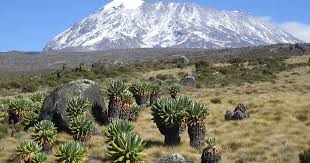
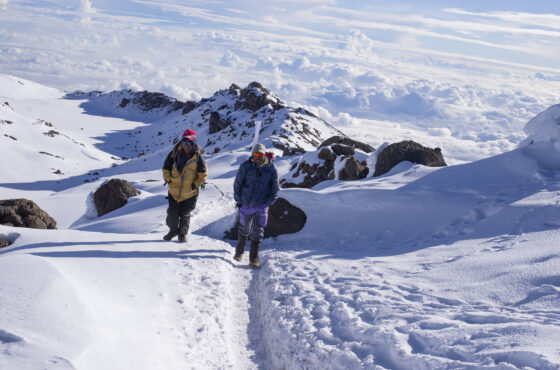
Begin among banana farms and coffee plantations in the Chagga villages that cradle Kilimanjaro’s lower slopes a reminder that this mountain is not a distant monument but a life-giving presence for local communities. Then step into the montane forest, where colobus monkeys swing through moss-draped trees and the air hums with birdlife. Higher still, the landscape opens to heath and moorland dotted with giant groundsels and lobelias botanical wonders found nowhere else on Earth. Above 4,000 meters, the alpine desert stretches in surreal silence: volcanic scree under a vast sky, where the only sound is your own breath. And finally, the summit night a pre-dawn ascent across the crater rim to Uhuru Peak, where the first light reveals glaciers glistening above clouds that blanket the continent below.
This moment standing atop Africa as the sun ignites the world beneath you transcends achievement. It becomes memory etched into bone and spirit. Yet Kilimanjaro asks something of you in return: respect for its fragility. Its famed glaciers, present for over 11,000 years, are receding rapidly a visible reminder of our changing planet. Climbers now walk with heightened awareness, following Leave No Trace principles and supporting responsible operators who partner with porters’ welfare initiatives like the Kilimanjaro Porters Assistance Project.
More than 35,000 people attempt Kilimanjaro annually, but each journey remains deeply personal. There is no single “Kilimanjaro experience” only yours: the porter who shares a quiet word of encouragement on a steep section, the shared thermos of tea at 4 a.m., the camaraderie forged with fellow climbers from across the globe, the silent gratitude when your boots finally touch the summit sign.
Kilimanjaro does not demand you conquer it. It invites you to walk with it to move at its pace, breathe its thinning air, witness its changing faces, and carry its perspective back into your life. This is not merely a climb. It is a pilgrimage available to anyone willing to take the first step.
Your mountain is waiting. Not to be defeated but to be met.