- 1
- 2
- 4
- 2
Lake Manyara National Park
Where the Wild Defies Expectation
Tucked between the towering Rift Valley escarpment and the shimmering alkaline waters of its namesake lake, Lake Manyara National Park is East Africa’s most delightful paradox a compact 330-square-kilometer sanctuary that consistently astonishes with its ecological diversity and moments of pure wonder.
Hemingway once described it as “the loveliest lake in Africa,” and the sentiment endures. From the moment you descend the escarpment wall, the landscape unfolds in striking layers: groundwater forests dripping with lianas give way to open grasslands, which melt into papyrus-lined wetlands and finally to the vast, mirror-like lake itself. In a single afternoon drive, you might spot blue monkeys leaping through mahogany canopies, watch hippos submerge in the marshes, and gaze across waters blushing pink with thousands of flamingos a concentration of habitats unmatched in such a small area.
Yet Manyara’s legend rests on its rebels the lions that refuse to follow convention. Here, prides famously lounge not on the savanna floor but draped along the limbs of acacia and sausage trees, a behavior rarely seen elsewhere in Africa. Watching a 400-pound male lion recline effortlessly six meters above the ground reshapes everything you thought you knew about these majestic cats. It’s this spirit of delightful unpredictability that defines Manyara: a park that rewards curiosity with moments that linger long after you’ve departed.
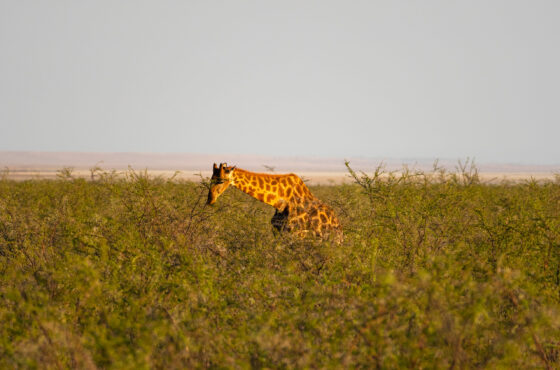
Beyond its tree-climbing lions, Manyara hosts over 400 bird species—from the comical helmeted guineafowl to fish eagles calling across the water and supports healthy populations of elephant, buffalo, giraffe, and the endemic Kirk’s dik-dik. During the wet season, the lake swells to cover two-thirds of the park, transforming it into a waterbird paradise; in the dry months, wildlife concentrates along the western shoreline, offering intimate viewing without the crowds of larger parks.
What Manyara offers travelers isn’t scale it’s soul. It’s the park where you can witness elephants silhouetted against a flamingo-streaked sunset, hear the echo of baboon troops through ancient forests, and understand why conservationist Jane Goodall chose these woodlands to begin her groundbreaking chimpanzee research (though the chimps themselves remain elusive in the adjacent forest reserve).
Perfect as a one-night immersion or a refreshing counterpoint between the grandeur of Ngorongoro and Serengeti, Lake Manyara proves that profound safari experiences aren’t measured in square kilometers. They’re found in the quiet surprise of a lion in a tree, the soft pink haze of flamingos taking flight at dusk, and the realization that sometimes, the most extraordinary wild places are the ones that ask you to look up and see the world differently.